

AERODYNAMIC TESTING
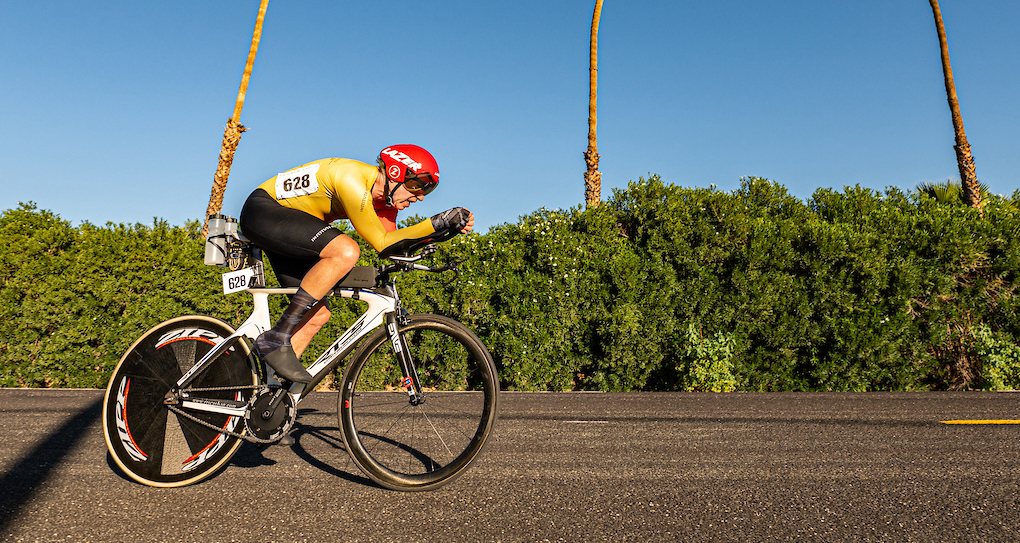
In 2019, racing in the 60+ age group at our local 20k Fiesta Island Time Trial Series, I set a PR of around 31 minutes. My average power for that ride was 275 watts. In 2025, racing in the 70+ age group, I did that same ride (20 seconds slower) but at an average power of 208 watts.
Where did 67 watts come from??? In 2022 I purchased an Aerosensor. That began a three-year (and ongoing) process of finding every aero gain I could. Some was expensive (new frame and wheels). Some was cheap (new hand position). But every change, big and small, was measured, compared, logged, and balanced.
In other words, is a particular change more aerodynamic but is not something I can replicate on the road or track? At one point I found a hand/arm position that was fast but made it hard to control the bike, so the net gain was less.
This is why aerodynamic testing outside, in conditions similar to where you will be racing, is critical. A wind tunnel has its advantages in terms of control and a strive for perfection. But racing on the road is not perfect.
I do almost all my testing on an outdoor velodrome. This means a surface and wind that replicates the road and bike control that replicates the road.
For me, my actual CdA number is less relevant than my fastest position on the bike and my equipment.
Most of my testing is about comparison. Is this helmet faster than that helmet? Is this skinsuit faster than that. Is a high-hand position faster than low and and how does bike control fit into that.
These are all things we can test. If you want an actual CdA number to talk about, which is kind of like talking about your FTP, we can get you a number from the software that is likely close.
But if you just want to go faster on the same power, that’s where this system shines.

VO2 AND LACTATE TESTING
Performance testing on the bike using INSCYD’s Power Performance Decoder (PPD). This is a next-level testing procedure that offers a complete metabolic profile using only a series of efforts on the bike…no blood, no ear or finger pricking.
This means you can perform the test locally, send over the .fit file, and we run the test using the software from INSCYD, getting lab-level accuracy.
Results include:
• VO2 max
• Vlamax
• Anerobic Threshold (MLSS)
• Fat Max
• Carb max
• Available glycogen
• Fat and carb production
• Lactate production
• Lactate recovery (clearance)
For racing, these numbers give you your metabolic resources along with targets to hit during a race.
For your coach, these numbers give you a clear picture of where you are today, what it will take to move the needle then, at a later date, the test can be repeated to accurately see progress in very specific areas.
The test is simple (but challenging): two 20-second all out efforts, one 3-minute and one 6-minute all out effort. You can do the test on your local roads or track. All you need is a bike and a power meter.
If you want to train to go faster, go longer, or just go, metabolic testing in the field, in real-world conditions, is the path forward.